
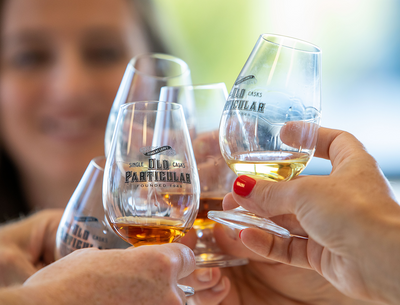


There is a particular pleasure in Whisky that feels unrepeatable - not merely limited, but singular. A bottle that exists because one cask, at one precise moment in time, expressed something worth preserving exactly as it was. Douglas Laing’s Old Particular Ardmore 10 Years Old belongs to that tradition: a Highland Single Malt shaped by peat smoke, refill oak and the quiet discipline of minimal intervention.
This is not Whisky engineered for consistency. It is Whisky presented as a snapshot - an honest document of maturation, wood and spirit. For drinkers who value individuality over uniformity, that distinction is essential.
What This Whisky Is - and Why It Matters
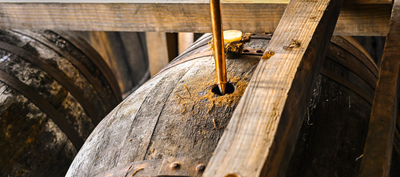
This release is a 10-year-old Highland Single Malt distilled at Ardmore, it comes from a single refill barrel , yielding just 348 bottles. The Whisky is bottled at its natural strength of 48.4% ABV, without added colouring and without chill-filtration - preserving texture, aroma and character exactly as the cask delivered it.
A refill barrel plays an important role here - and in this case, it carries an added dimension. The Whisky finished in an ex-Laphroaig barrel, meaning the Ardmore spirit rested in wood previously charged with Islay peat smoke. Rather than overwhelming the Highland character, this prior seasoning adds a subtle maritime intensity: medicinal smoke, char and savoury depth woven into Ardmore’s earthier peat profile.
Refill wood still allows the distillery character to remain in the foreground, but the Laphroaig influence introduces an extra layer of smoky complexity that feels deliberate rather than dominant.
Douglas Laing and the Significance of Old Particular
Douglas Laing, founded in 1948 and still family owned, is one of Scotland’s most respected independent bottlers. Selecting individual casks that showcase distilleries from alternative angles - often revealing nuances absent from official releases.
The Old Particular range is the cornerstone of that mission. It represents carefully chosen single casks bottled with minimal intervention, emphasising authenticity and transparency. The range is not about prestige signalling or exaggerated rarity; it is about flavour integrity. Each cask is evaluated for balance, character and expressive clarity before bottling.
Where some Whisky programmes prioritise branding narratives, Old Particular prioritises the sensory experience. These are Whiskies selected because they taste compelling - not because they fit a marketing template.
Ardmore: Highland Smoke with Its Own Voice
Ardmore is an unusual presence in the Highland Whisky landscape. While peat is more often linked to island distilleries, Ardmore’s smoke carries an inland warmth - bonfire rather than iodine. In this single cask, finishing in an ex-Laphroaig barrel adds a quiet Islay accent, layering medicinal smoke and subtle salinity onto that Highland core. The effect feels less like a fusion than a dialogue: Ardmore’s earthy peat broadened by the memory of Islay wood.
That character comes through clearly in the glass. The nose opens bright and fruity before smoke builds - bonfire embers and charred oak edged with a faint medicinal note. The palate is oily and savoury, where soot and ash meet crispy bacon and peated barley, leading to a long finish of smoke, allspice, cured meat and a gentle saline echo. It is peat expressed with restraint - layered, textured and controlled rather than forceful.
Rarity Beyond the Numbers
The figure, 348 bottles, signals scarcity, but the true rarity lies in the nature of single cask Whisky itself.
Each barrel matures uniquely. Warehouse placement, wood grain, seasonal variation and spirit chemistry create outcomes that cannot be duplicated. Even another Ardmore refill cask from the same year would produce a different Whisky.
Independent bottlings like this preserve those one-off outcomes. They serve as alternative perspectives on a distillery’s character - snapshots that exist only once.
Age, too, is contextual. Ten years in refill wood allows Ardmore’s smoky profile to mature without being overshadowed. The Whisky sits in a sweet spot where vibrancy and structure coexist - a phase of development that, once passed, cannot be revisited.
Drinking Experience: Texture, Smoke and Patience
This is a Whisky best approached slowly. Its oily texture coats the palate, encouraging exploration. Neat tasting foregrounds smoke and savoury depth, while a few drops of water soften the edges and reveal fruit beneath the ash.
There is no theatrical intensity here - no attempt to overwhelm. Instead, the dram unfolds in measured layers, rewarding attention rather than demanding it.
For collectors, the appeal lies in its singular nature. For drinkers, it is the pleasure of Highland peat delivered with clarity and honesty.
The Broader Appeal of Single Cask Whisky
The Old Particular Ardmore 10 Years Old succeeds because it captures a moment of layered identity - Highland peat finished in an ex-Laphroaig cask, where smoke, fruit, savoury depth, and texture meet in expressive balance. They celebrate variation rather than suppress it. Each bottle becomes a record of time, place and maturation - an intersection of craft and circumstance.
Douglas Laing’s Old Particular series embraces this philosophy fully. The emphasis is not on standardisation, but on preserving the individuality that makes Whisky endlessly fascinating.
Final Thoughts: A Snapshot of Highland Character
The Douglas Laing Old Particular Ardmore 10 Years Old succeeds because it does not attempt to be more than it is. It presents a Highland peat Whisky at a moment of expressive balance.
Its appeal lies in honesty: a single cask selected for character, bottled with restraint and offered as a finite experience. For those who value Whisky as both craft and narrative, this Ardmore stands as a reminder that some of the most compelling drams are not designed for repetition - only for appreciation.
